Home / Blocked drains
Blocked drains
Cleared, then filmed.
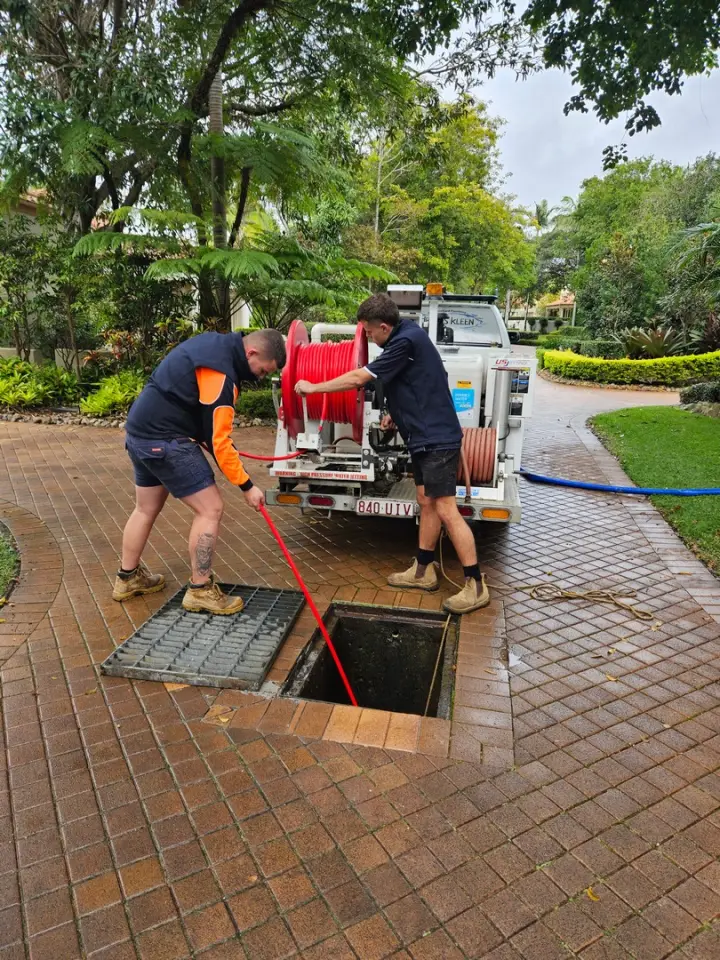
Toilets, sinks, sewers and stormwater, for homes, businesses and council sites. We clean drains from 25mm to 2 metres, and where we can, we put a camera through after to show it’s clear.
The usual culprits
What’s in there.
Tree roots
Roots find the water through a split pipe and keep growing until the drain blocks.
Fat, silt and grime
Grease, sand, leaves and general build-up that set along the pipe.
Wipes and sanitary items
Flushed down the toilet. “Flushable” wipes included.
Squashed or broken pipe
Bad installs, corrosion, breaks and slipped rubbers catch everything that passes.
Concrete and rocks
Cement, rubble and building materials washed or poured into the drain.
Screw piers and star pickets
Driven straight through the pipe. We cut them out from inside.
How we clear it
The right tool for the blockage.
The method depends on the size of the drain, what’s in it and where it is. We walk you through what’s going on before we start.
CCTV drain inspection
A high-resolution camera on a flexible cable goes in first, so we can see the blockage or damage.
High-pressure water jetting
Hydro jetting blasts through silt, leaves, fat, tree roots and even concrete slurry.
Mechanical cleaning
For floor wastes and sink drains: scrapes build-up off the pipe wall and breaks up the blockage.
Root cutting
Larger roots are cut away from the pipe wall, then jetted out.
Hydro vacuum truck
Jetting and suction together, for sand, sludge and big industrial or council lines.
Robotic cutting
For pipes under slabs: screw piers and hardened concrete cut from inside before the pipe is relined.
Blocked toilets
Gurgling, a slow flush, or a bowl that fills and won’t go down. It might be just the toilet, or the main sewer. A plunge first; if that fails, the high-pressure jetter, then a camera to make sure it’s done properly and to find out why, especially if it isn’t the first time.
Blocked sewers
The sewer from your house to the main connection is the owner’s to maintain. Watch for gurgling, smells and slow drains. Most homes have an overflow gully outside so sewage escapes there, not inside. If yours doesn’t, it can come up through the shower or floor waste: we treat that as urgent.
Blocked stormwater
Long dry spells let leaves and garden debris pile up, then a downpour washes it all into the pipes. Most people only find out when it rains. A CCTV check before the wet season, and jetting if it’s blocked, means a storm doesn’t flood the yard.
Commercial and council
We work around your trading hours to keep disruption down, and clean sewer mains, stormwater pits and public drains for councils and industrial estates.
Questions
Blocked drain questions.
How much does blocked drain cleaning cost?
Every blockage is different, so we charge an hourly rate and there’s no call-out fee: you pay for the time it takes. Heavy root intrusion, hard-to-reach drains and after-hours emergencies take longer or cost more than scheduled maintenance.
Can I clear a blocked drain myself?
Sometimes. Run hot (not boiling) water down the sink weekly, try half a cup of baking soda then half a cup of vinegar, left 10 to 15 minutes and flushed with hot water, or use a plunger with a good seal. Call a pro for drains that keep going slow, gurgling or smells, several drains at once, or water backing up into sinks, showers or toilets.
How often should drains be professionally cleaned?
For homes, every 12 to 24 months, sooner with older pipes or trees nearby. For restaurants, cafés and offices, every 6 to 12 months, because grease and food waste build up faster.
What happens when you come out?
We talk through what you’ve noticed, look at where the problem is, and pick the right method. For recurring or complex blockages we put a CCTV camera in to find the exact cause. We clean the drain, check it again to make sure it’s clear, and tell you how to stop it happening again.
Nobody knows drains like dRAINS kLEEN
Drain playing up?
Ring the office, or tick what’s happening on the home page and we’ll have a fair idea before we arrive.